
As the sun sets and the kitchen fills with the warm aromas of dinner, I often find myself craving something a little different. That’s when this Vegan “Eel” Sushi with Homemade Unagi Sauce comes to the rescue—bringing the rich flavors of traditional sushi right to my table, but with a plant-based twist. This delightful recipe features tender eggplant and perfectly seasoned sushi rice, making it not only a crowd-pleaser but also quick and easy enough for a weeknight dinner. Plus, it’s gluten-free, refined sugar-free, and boasts just five simple ingredients! Whether you’re a seasoned home chef or someone looking to shake off fast food habits, this dish is sure to impress. What new flavors are you excited to explore in your own kitchen?
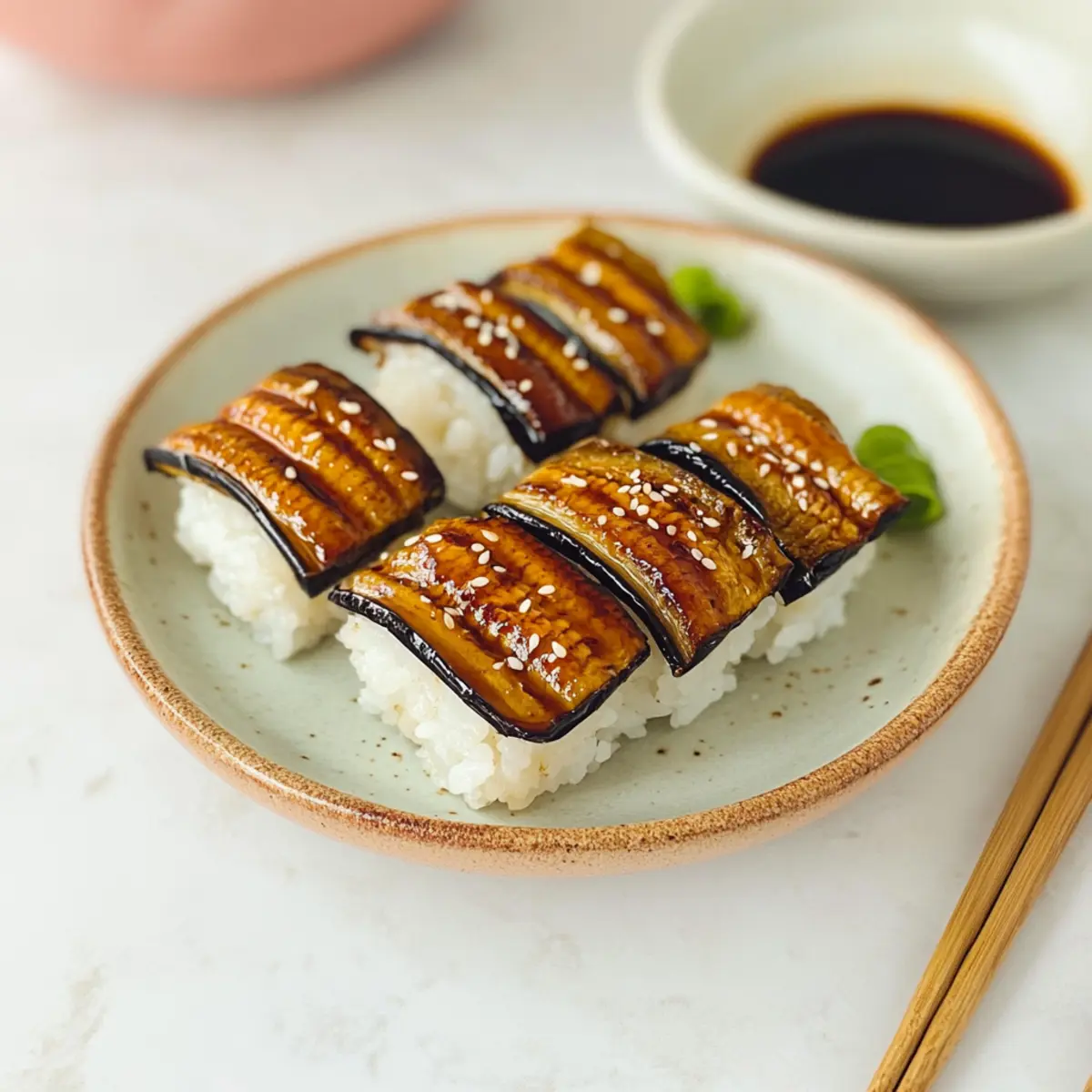
Why is Vegan Eel Sushi a Must-Try?
Unique Twist: This recipe offers a remarkable plant-based alternative to traditional eel sushi, satisfying both flavor and texture cravings.
Simplicity: With just five ingredients, it’s easy to whip up this dish, making it perfect for busy weeknights or impressive dinner parties.
Versatile Options: Feel free to customize your rolls with avocado or tempura veggies, creating a personalized flavor experience every time.
Health-Conscious: Packed with nutrients and free from refined sugars and oils, it’s a wholesome choice for anyone looking to eat healthier.
Crowd-Pleaser: Impress family and friends with this exquisite vegan sushi, proving that plant-based dishes can be just as indulgent and delicious. If you’re looking for more tantalizing plant-based recipes, consider checking out Spicy Salmon Sushi or Pecan Pie Baked Oatmeal.
Vegan Eel Sushi Ingredients
For the Sushi Rolls
• Japanese/Chinese Eggplants – Provides a meaty texture that simulates eel. If eggplant isn’t preferred, the unagi sauce can be made without it.
• Gluten-Free Soy Sauce or Tamari – Adds umami and saltiness. Ensure it’s labeled gluten-free if necessary.
• Mirin – A Japanese sweet rice wine that enhances sweetness and flavor depth. Rice vinegar with a bit of sugar can act as an alternative.
• Coconut Sugar – Serves as a sweetener for the unagi sauce. Brown sugar can be used if not constrained by dietary preferences.
• Salt – For seasoning the eggplant, enhancing flavor.
For Cooking
• Neutral Oil – Used for cooking eggplant; can be omitted for an oil-free version.
Optional Garnishes
• Green Onions – Adds freshness and a pop of color to your sushi.
• Sesame Seeds – Elevates presentation and adds a subtle crunch.
Get ready to enjoy a delicious Vegan Eel Sushi that’s both satisfying and guilt-free!
Step‑by‑Step Instructions for Vegan “Eel” Sushi
Step 1: Prepare the Eggplant
Start by peeling the Japanese or Chinese eggplants and slicing them lengthwise into 1/4″ thick planks. If you’re planning to make sushi rolls, cut the planks into 4-5″ pieces. Arrange the eggplant slices on a plate—this preparation step helps create a beautiful texture for your Vegan Eel Sushi.
Step 2: Salt the Eggplant
Generously sprinkle salt over the eggplant slices, allowing them to draw out moisture. Let the salted eggplant sit for about 15-20 minutes, during which time the salt will enhance the flavor significantly. Once they’ve rested, rinse the slices under cold water and pat them dry with a clean kitchen towel to remove excess salt.
Step 3: Cook the Eggplant
In a skillet over medium heat, add your choice of neutral oil. Once hot, sauté the eggplant slices for about 5-7 minutes, turning them occasionally until they are lightly golden and tender. This step is crucial for achieving a satisfying texture that mirrors traditional eel in your Vegan Eel Sushi.
Step 4: Make the Unagi Sauce
Using the same skillet, combine gluten-free soy sauce, mirin, and coconut sugar. Stir gently and bring the mixture to a simmer over medium heat, ensuring the sugar dissolves completely. As the sauce begins to bubble, it will develop a glossy sheen, typical of unagi sauce, and fill your kitchen with delightful aromas.
Step 5: Braise the Eggplant
Add the previously cooked eggplant slices back into the skillet with the sauce. Cook for an additional 3-5 minutes, allowing the eggplant to absorb the flavors while the sauce thickens slightly. This step is key to infusing the Vegan Eel Sushi with that rich, savory taste, similar to traditional preparations.
Step 6: Serve the Sushi
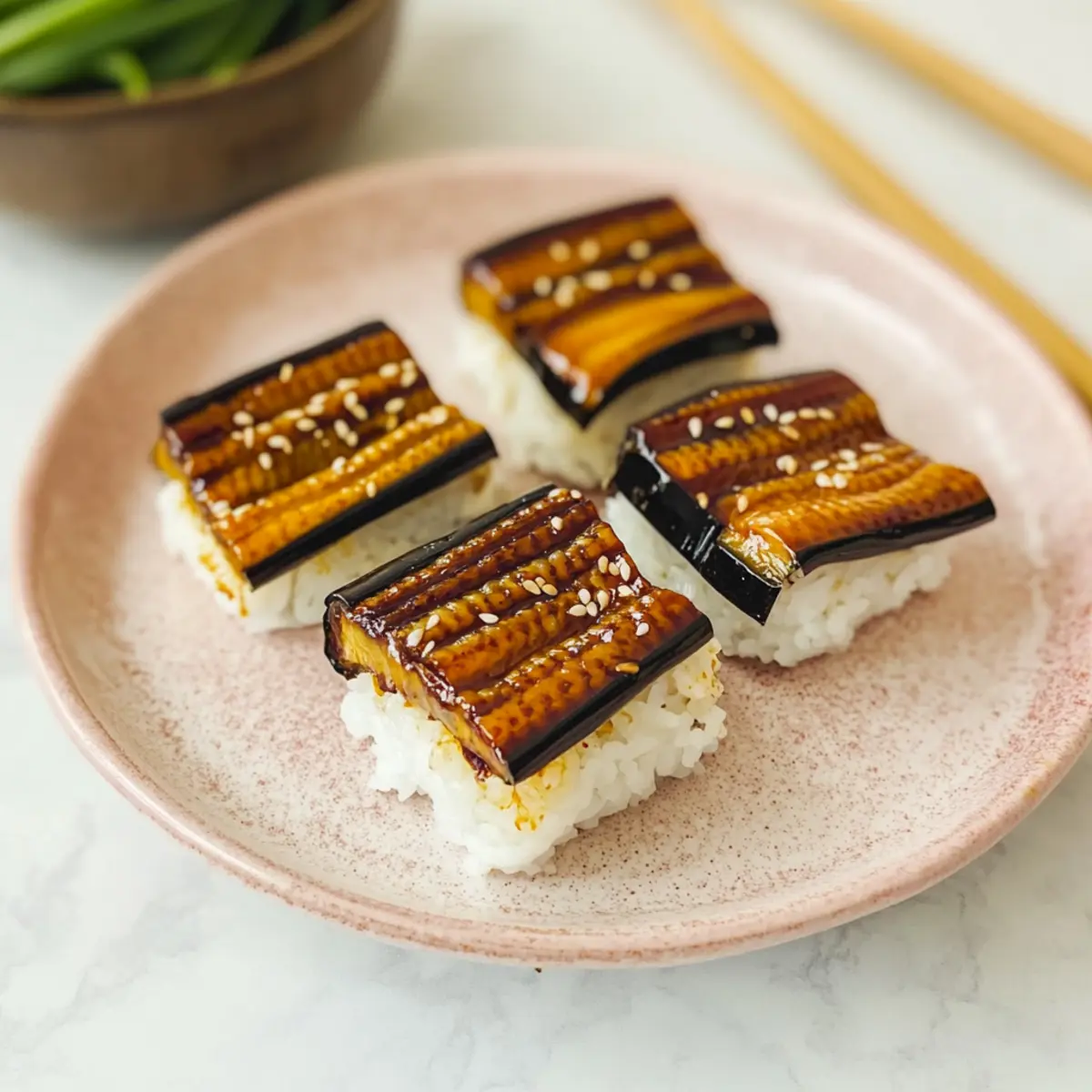
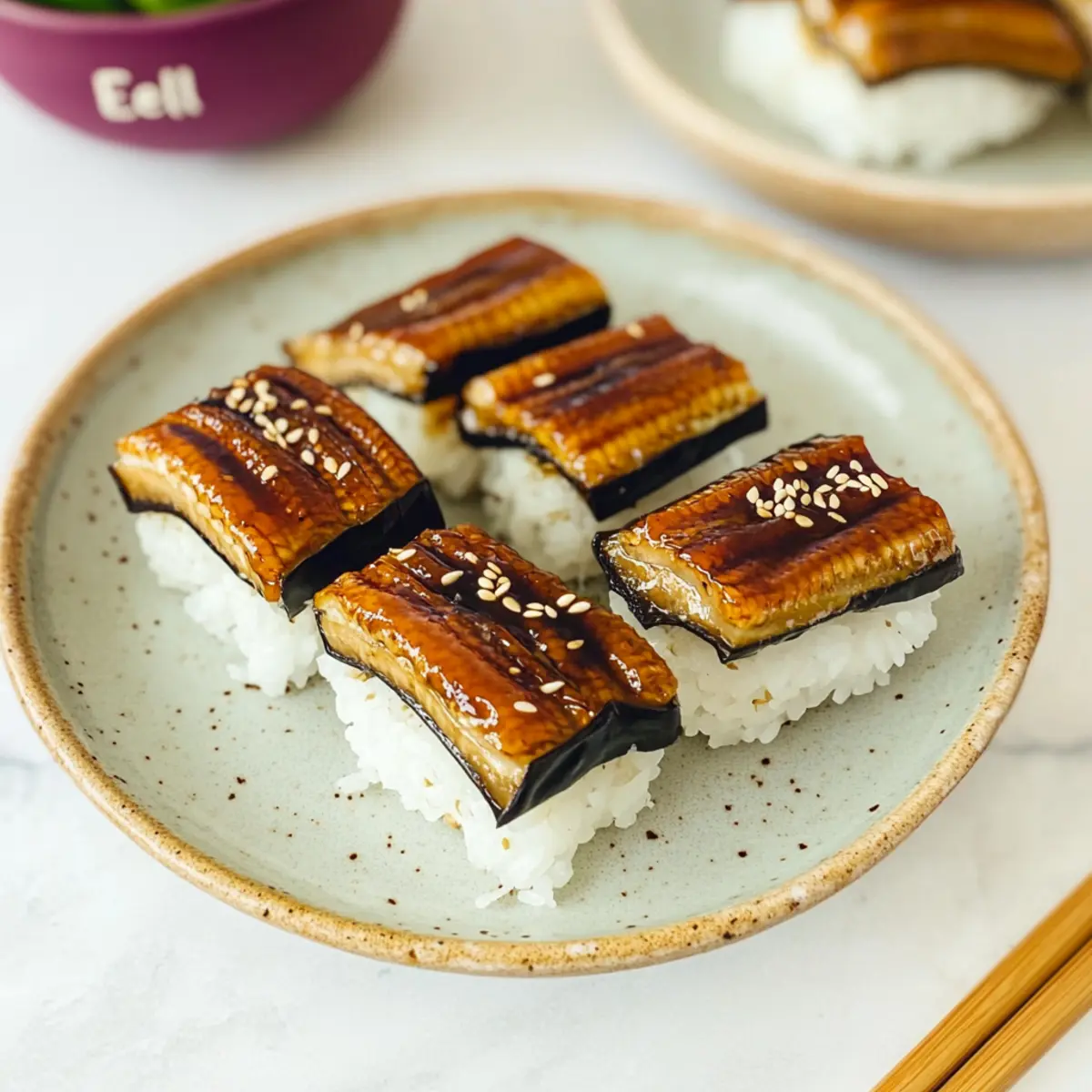
Once the eggplant is well-coated and the sauce is thickened, it’s time to plate your Vegan Eel Sushi. Carefully arrange the eggplant over a bed of perfectly seasoned sushi rice, drizzle with extra unagi sauce, and garnish with thinly sliced green onions and sesame seeds. The presentation will be as delightful as the flavors!
What to Serve with Vegan “Eel” Sushi
This delightful plant-based dish pairs beautifully with a variety of sides and drinks, creating a complete and satisfying meal experience.
- Creamy Avocado Salad: The buttery texture of ripe avocado adds a refreshing contrast, balancing the flavors of the sushi. Serve this salad drizzled with lime for a burst of zing.
- Crispy Tempura Vegetables: Light and crunchy, these fried veggies offer a perfect textural complement. Consider sweet potato or broccoli for delightful pairing choices.
- Steamed Edamame Pods: Lightly salted and warm, edamame is a great addition. Their protein-packed goodness rounds out your meal beautifully!
- Misoshiru (Miso Soup): A warm bowl of miso soup enhances the umami experience while providing a comforting touch to your dining experience.
- Pickled Ginger and Wasabi: Essential accompaniments to sushi, they bring bright, pungent notes that elevate the overall taste. Plus, they cleanse the palate after bites of sushi!
- Chilled Green Tea: Refreshing and caffeine-rich, green tea serves as the perfect drink pairing, enhancing the meal’s overall flavor profile.
- Coconut Mochi for Dessert: Treat yourself with these chewy, sweet delights. Their subtle sweetness contrasts beautifully with the savory sushi, leaving you utterly satisfied.
- Fruit Platter: A colorful array of seasonal fruits provides a light finish, cleansing the palate with refreshing flavors and natural sweetness.
Consider these pairs for a full dining experience that highlights the deliciousness of Vegan Eel Sushi!
Expert Tips for Vegan Eel Sushi
-
Perfectly Salted Eggplant: Ensure you salt the eggplant adequately during the preparation process to draw out moisture and enhance its flavor for the Vegan Eel Sushi.
-
Cooking Technique: Cook the eggplant until it’s just tender, avoiding overcooking. This maintains its structure and ensures the sushi isn’t mushy.
-
Authentic Flavor: For an extra touch of authenticity, consider using a kitchen torch to lightly char the eggplant after cooking, mimicking the grilled effect of traditional eel.
-
Sushi Rice Perfection: Make sure your sushi rice is seasoned well with rice vinegar, salt, and sugar to complement the umami flavors of the unagi sauce.
-
Garnish with Care: Don’t skip the optional garnishes like green onions and sesame seeds; they not only add visual appeal but also enhance the overall flavor of your Vegan Eel Sushi.
Variations & Substitutions for Vegan Eel Sushi
Feel free to embark on a culinary adventure by customizing this delightful Vegan Eel Sushi to suit your taste buds!
- Dairy-Free: Use plant-based cream cheese or avocado slices instead of traditional cream cheese for a creamy twist.
- Nut-Free: Omit any nut-based garnishes and instead opt for sunflower seeds for a similar crunch without allergens.
- Tempura Veggies: For an extra crunch, add tempura-fried vegetables inside the sushi rolls, elevating texture and flavor.
- Spicy Kick: Incorporate a drizzle of sriracha or spicy mayonnaise for those who enjoy a little heat with their sushi.
- Sushi Bowls: Instead of rolling sushi, consider turning it into a sushi bowl with rice, eggplant, and toppings—just as tasty and easier to assemble!
- Herb Infusion: Add fresh herbs like cilantro or Thai basil to give your sushi an aromatic punch that complements the savory eggplant beautifully.
- Variety of Sauces: Swap out the unagi sauce for a sesame soy dressing or teriyaki glaze to create a new flavor profile.
- Pickled Vegetables: Enhance your sushi with pickled carrots or radishes for a tangy crunch that balances the sweetness of the unagi sauce.
By the way, if you’re intrigued by the world of plant-based recipes, you might enjoy making Frozen Edamame as a delightful side or snack alongside your sushi, or indulge in a warm bowl of Pecan Pie Baked Oatmeal for a sweet treat afterward!
Make Ahead Options
Preparing the Vegan “Eel” Sushi ahead of time is a fantastic way to save valuable moments in your busy week! You can slice and salt the eggplant up to 24 hours in advance, allowing it to infuse with flavor while keeping its texture intact. Additionally, the unagi sauce can be made and stored in the refrigerator for up to 3 days; just make sure to let it cool completely before transferring it to an airtight container. When you’re ready to serve, simply sauté the eggplant, braise it in the sauce, and assemble your sushi with freshly cooked sushi rice. This strategic prep means you can enjoy gourmet Vegan Eel Sushi at home with minimal effort!
Storage Tips for Vegan Eel Sushi
- Fridge: Store leftover Vegan Eel Sushi in an airtight container in the refrigerator for up to 2 days to maintain its freshness and flavor.
- Freezer: While it’s best enjoyed fresh, you can freeze the cooked eggplant and unagi sauce separately for up to 1 month. Thaw in the fridge before serving.
- Reheating: To reheat, gently warm the sushi in a microwave for about 30 seconds or until heated through. Avoid overheating to maintain texture.
- Serving Fresh: For optimal flavor and enjoyment, serve the sushi with pickled ginger and wasabi immediately after preparing.
Vegan “Eel” Sushi Recipe FAQs
What type of eggplant is best for this recipe?
Absolutely! Japanese or Chinese eggplants are ideal for replicating the meaty texture of eel. If you prefer not to use eggplant, you can simply make the unagi sauce and use it in other dishes.
How should I store leftover Vegan Eel Sushi?
Store any leftovers in an airtight container in the refrigerator for up to 2 days. To maintain their best texture, avoid stacking the sushi rolls on top of each other.
Can I freeze the Vegan Eel Sushi?
While it’s best enjoyed fresh, you can freeze the cooked eggplant and unagi sauce separately. Place them in airtight containers and store for up to 1 month. When you’re ready to enjoy, thaw overnight in the fridge and reheat gently.
What if the eggplant is too salty after salting?
If you find your salted eggplant too salty, simply rinse the slices under cold water and pat them dry with a kitchen towel. This step will help eliminate excess salt while retaining the enhanced flavor from the salting process.
Is this recipe suitable for gluten-free diets?
Very! Just be sure to use gluten-free soy sauce or tamari, and check that any other ingredients, like mirin, are also gluten-free. Enjoying this delightful Vegan Eel Sushi aligns beautifully with gluten-free eating!
Can I use other ingredients as substitutions in the unagi sauce?
Certainly! If you don’t have mirin, you can mix rice vinegar with a little sugar to create a makeshift alternative. For the coconut sugar, brown sugar works just as well, ensuring you still capture that sweet depth in your unagi sauce.
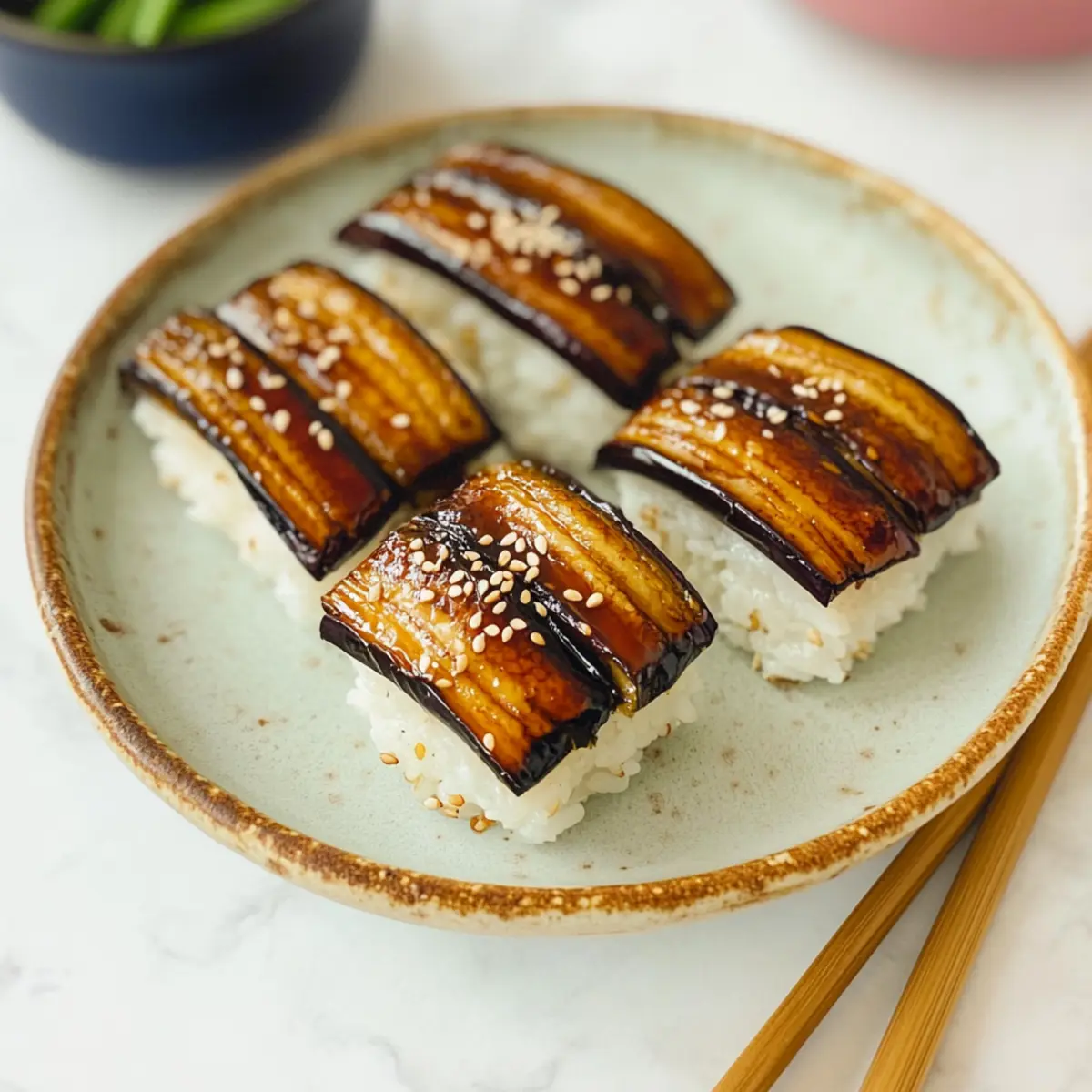
Vegan Eel Sushi That Tastes Just Like the Real Thing
Ingredients
Equipment
Method
- Prepare the Japanese or Chinese eggplants by peeling and slicing them lengthwise into 1/4" thick planks.
- Salt the eggplant slices and let them sit for 15-20 minutes to draw out moisture, then rinse and pat dry.
- In a skillet, sauté the salted eggplant slices in neutral oil over medium heat for 5-7 minutes.
- In the skillet, combine gluten-free soy sauce, mirin, and coconut sugar. Bring to a simmer.
- Braise the cooked eggplant slices in the sauce for an additional 3-5 minutes.
- Serve the eggplant over sushi rice, drizzle with sauce, and garnish with green onions and sesame seeds.
Leave a Reply