
As I scrolled through my culinary memories, the intoxicating scent of spices and herbs whisked me back to a bustling Vietnamese street market. I can almost hear the sizzle of chicken hitting the pan, awakening my taste buds in anticipation of this Authentic Vietnamese Chicken Curry (Cà Ri Gà). This comforting bowl of goodness is a warm hug for the soul, perfect for those chilly nights when you crave something hearty yet wholesome. With tender chicken slow-cooked in a creamy coconut broth and packed with vibrant vegetables, it’s not just a recipe—it’s a delightful experience that brings friends and family together. Plus, it’s gluten-free, making it a great option for everyone at the table! Ready to dive into the irresistible flavors of this traditional dish? Let’s get cooking!
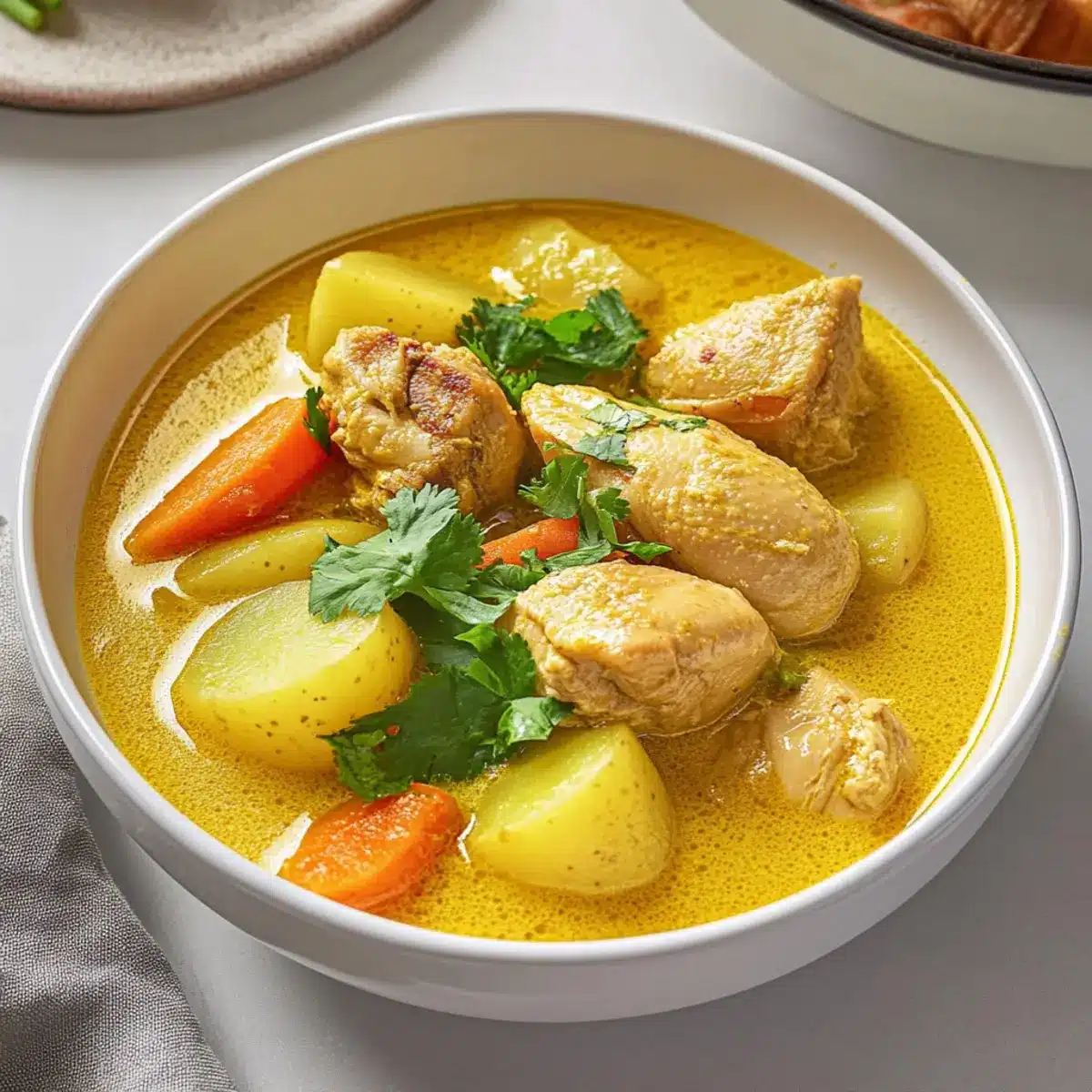
Why is Vietnamese Chicken Curry So Irresistible?
Comforting, Hearty Delight: This dish brings warmth and joy, transforming any meal into a cozy gathering.
Brilliant Flavors: A rich, aromatic broth infused with spices makes every spoonful a sensory delight.
Easily Customizable: Make it vegetarian with tofu or add extra veggies to suit your preference.
Quick Cooking Time: With just a few steps, you can have a delectable meal ready in under an hour!
Crowd-Pleasing: Perfect for sharing, whether with friends, family, or as a dinner party hit. Pair this with a crispy baguette or enjoy over rice—your taste buds will thank you! If you’re looking for more comforting options, consider trying Cheesy Southwest Chicken or Crack Chicken Noodle.
Vietnamese Chicken Curry Ingredients
• Dive into a flavorful adventure with these essential ingredients!
For the Curry Base
- Shallots – Aromatic base for depth of flavor; substitute with onions if unavailable.
- Garlic – Adds pungency and character; use fresh for best results.
- Ginger – Provides warmth and spiciness; fresh ginger is preferred.
- Whole Chicken (3.5 lbs) – Main protein, flavorful when cooked slowly; can substitute with thighs or drumsticks.
- Yellow Curry Powder – Key spice blend providing color and warmth; adjust quantity for spiciness.
- Salt – Enhances overall flavor; sea salt recommended for better taste.
- Chicken Bouillon Powder – Adds umami flavor; use low-sodium version if preferred.
- Sugar – Balances spice and adds sweetness; adjust based on taste.
- Vegetable Oil – For sautéing without overpowering flavors; can use peanut oil.
- Paprika – Adds color and subtle flavor; substitute with cayenne for heat.
- Shaoxing Wine – Enhances marinade flavor; can use dry sherry for a substitute.
For the Vegetables
- Potatoes – Provides heartiness; cut into large pieces to prevent falling apart.
- Taro – Adds unique flavor and texture; substitute with sweet potatoes if needed.
- Carrots – Contributes sweetness; ensure they are cut larger to maintain structure during cooking.
- Lemongrass – Aromatic herb giving citrus notes; fresh stalks are best.
For the Creamy Broth
- Turmeric Powder – For color and earthiness; can be omitted for allergies.
- Five Spice Powder – Adds complexity; adjust to taste.
- Bay Leaves – Infuses flavor during cooking; remember to remove before serving.
- Coconut Water – Provides natural sweetness and hydration; can substitute with vegetable broth.
- Coconut Milk – Adds creaminess and richness; use light coconut milk for a lower-calorie option.
- Whole Milk – For creaminess and body; could substitute with almond milk for a lighter version.
- Fish Sauce – Traditional Vietnamese ingredient gives umami depth; use soy sauce for a vegan option.
For Serving
- French Baguette – Perfect for dipping; can replace with rice or rice noodles for serving.
Get ready to embark on a cooking journey with these ingredients for your flavorful Vietnamese Chicken Curry!
Step‑by‑Step Instructions for Vietnamese Chicken Curry
Step 1: Prepare Aromatics
Begin by pulsing shallots, garlic, and ginger in a food processor until finely chopped, achieving a fragrant paste. Reserve half for the marinade and set aside the other half for later use in the Vietnamese Chicken Curry. This aromatic base will infuse wonderful flavor throughout the dish.
Step 2: Marinate Chicken
In a large bowl, combine the chicken pieces with the reserved aromatics, yellow curry powder, salt, sugar, chicken bouillon, and vegetable oil. Mix well, ensuring all the chicken is coated thoroughly. Cover and refrigerate for 3-4 hours, or ideally overnight, to allow the flavors to penetrate deeply into the chicken.
Step 3: Pan-Fry Vegetables
Heat a generous splash of vegetable oil in a large skillet over medium heat. Add the potatoes, taro, and carrots, frying until they develop a golden hue, which should take about 5-7 minutes. Stir occasionally to prevent sticking. Once golden, transfer them to a plate and set aside for later use in the curry.
Step 4: Pan-Fry Chicken
In the same skillet, add the marinated chicken pieces in batches, ensuring they sear properly without crowding the pan. Cook for about 6-8 minutes until golden brown on all sides. Transfer the browned chicken to a separate plate, allowing the delicious drippings to flavor your curry later.
Step 5: Sauté Aromatics
In a large pot over medium heat, add lemongrass and the remaining aromatics you prepared. Cook them for 3-4 minutes until they release their delightful fragrance, stirring regularly. This step builds a strong aromatic foundation for your Vietnamese Chicken Curry, enhancing its depth of flavor.
Step 6: Add Spices
Sprinkle in the yellow curry powder, turmeric, five-spice powder, and bay leaves alongside the sautéed aromatics. Stir these spices into the mixture for about 2 minutes until they bloom and create a vibrant aroma. This crucial step brings out the rich colors and intense flavors characteristic of Vietnamese Chicken Curry.
Step 7: Combine Chicken and Broth
Return the seared chicken to the pot, along with any accumulated juices. Pour in the coconut water and season with extra salt if needed. Bring the mixture to a gentle simmer, then cover and let it cook for about 20 minutes. The chicken will absorb the exotic flavors while becoming tender.
Step 8: Final Additions
After 20 minutes, add the whole milk, coconut milk, and the previously pan-fried vegetables to the pot. Stir gently, and let everything simmer together for an additional 15 minutes until the vegetables are tender and the broth is creamy. This final step will create a luscious, comforting Vietnamese Chicken Curry.
Step 9: Serve
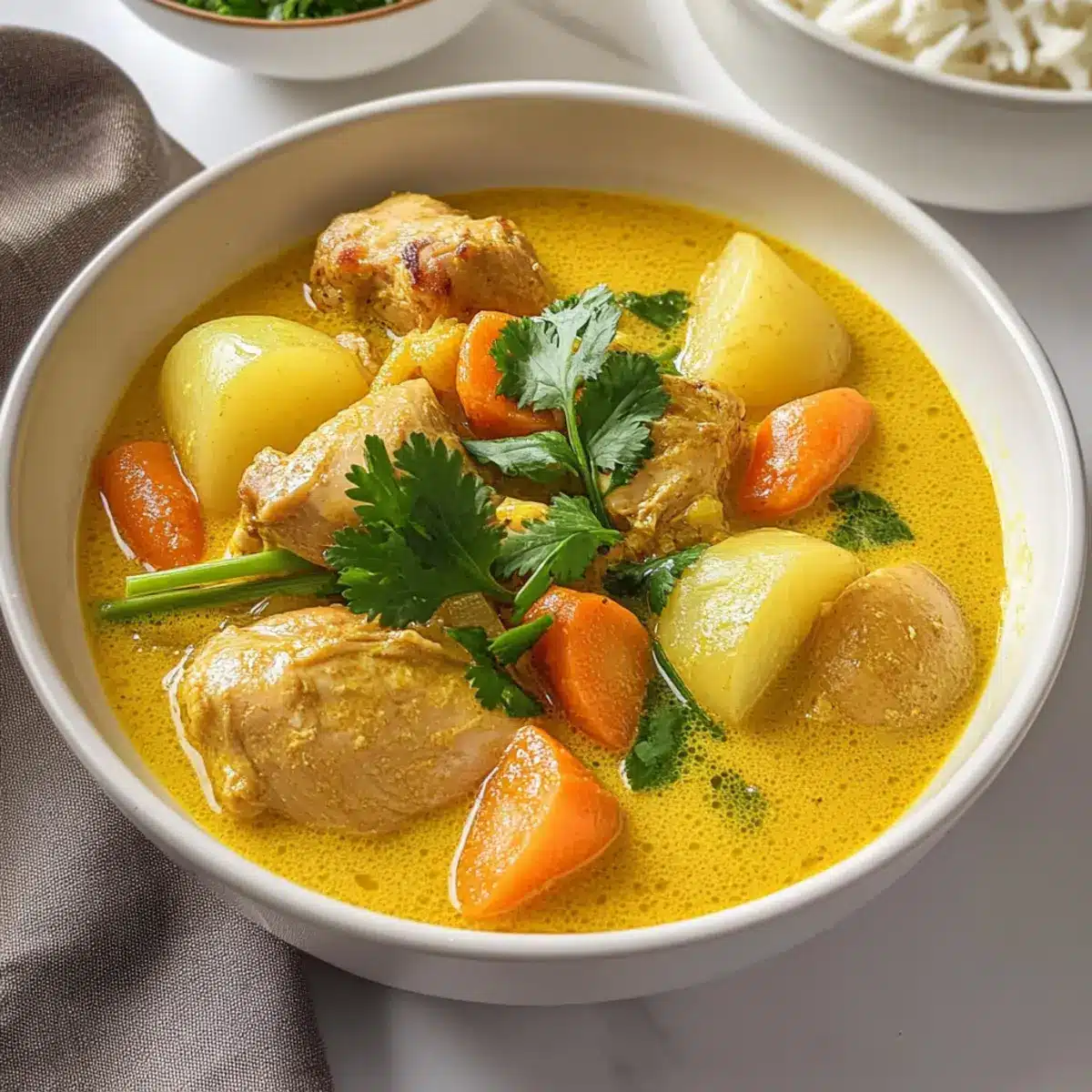
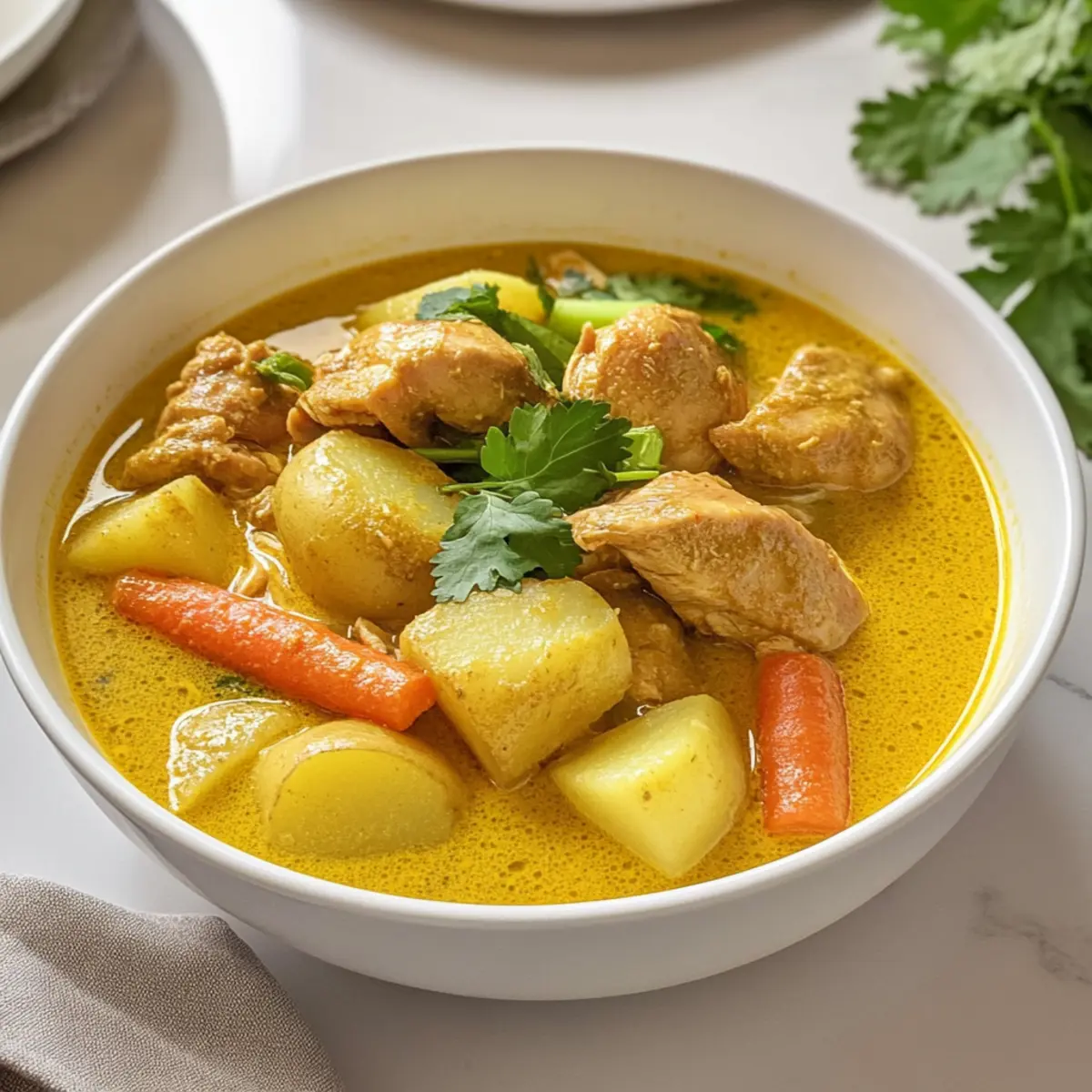
Once the curry is done simmering, remove the bay leaves and lemongrass stalks. Ladle the Vietnamese Chicken Curry into bowls, garnishing with freshly chopped cilantro and sliced green onions for a burst of freshness. Serve hot alongside a crispy baguette or over a bed of rice for a truly delightful meal.
Expert Tips for Vietnamese Chicken Curry
-
Marinate for Flavor: Allow the chicken to marinate overnight for maximum flavor infusion. This makes a significant difference in your Vietnamese Chicken Curry.
-
Aromatic Freshness: Always opt for fresh aromatics like shallots, garlic, and ginger. Dried alternatives won’t give you the same vibrant flavor.
-
Cut Wisely: Cut your vegetables into larger pieces to ensure they maintain structure and don’t become mushy during cooking.
-
Season at the End: Adjust your seasoning towards the end of cooking. This allows you to tailor the flavors of the Vietnamese Chicken Curry to your liking without overpowering the dish.
-
Remove Before Serving: Remember to take out the bay leaves and lemongrass stalks before serving to enhance the dining experience without any unpleasant surprises.
How to Store and Freeze Vietnamese Chicken Curry
Fridge: Store leftover Vietnamese Chicken Curry in airtight containers for up to 5 days. Make sure it’s completely cooled before sealing to avoid condensation.
Freezer: Freeze the curry in portioned containers for up to 3 months. For best results, separate vegetables from the broth before freezing to prevent them from becoming mushy.
Reheating: Thaw overnight in the fridge before reheating on the stove over medium heat, stirring occasionally. Add a splash of coconut milk or broth to restore creaminess if needed.
Room Temperature: Do not leave the curry out at room temperature for more than 2 hours to ensure food safety.
What to Serve with Authentic Vietnamese Chicken Curry (Cà Ri Gà)
The perfect meal feels complete when complemented by delightful side dishes that enhance the flavors and textures of your main dish.
- Crispy French Baguette: Perfect for dipping into the creamy coconut broth, this crusty bread adds a satisfying crunch to every bite.
- Steamed Jasmine Rice: Fluffy and fragrant, jasmine rice balances the rich spices of the curry and absorbs the flavorful sauce beautifully.
- Fresh Green Salad: A light, crisp salad with a tangy vinaigrette refreshes the palate and contrasts the curry’s warmth, making each bite enjoyable.
- Stir-Fried Bok Choy: Slightly crunchy and mildly sweet, this vegetable dish brings a fresh crunch that pairs perfectly with the savory chicken curry.
- Chili Garlic Noodles: Tossed in a chili garlic sauce, these noodles add a kick and complement the warm flavors of the chicken curry captivatingly.
- Coconut Sorbet: To finish your meal on a sweet note, a refreshing coconut sorbet offers a light and cooling contrast to the hearty curry, providing a wonderful tropical twist.
Vietnamese Chicken Curry Variations
Feel free to customize your dish with these delightful tweaks, enhancing flavors and textures to suit your taste buds!
-
Vegetarian Option: Swap chicken for tofu or tempeh, marinating similarly for a plant-based delight.
-
Add Extra Veggies: Toss in bell peppers, mushrooms, or broccoli for a nutritious boost. The more colors, the merrier!
-
Spicy Kick: Amp up the heat with sliced chili peppers or additional curry powder. For those who adore spice, this is a must-try!
-
Heartier Base: Replace potatoes with sweet potatoes for a unique sweetness that complements the curry beautifully.
-
Low-Calorie Twist: Use light coconut milk and almond milk instead of whole milk, keeping creaminess with fewer calories.
-
Grain Alternatives: Consider serving the curry over quinoa or farro instead of conventional rice for a nutty flavor infusion.
-
Herbal Upgrade: Add a sprinkle of fresh cilantro or basil at the end for a burst of freshness that lightens the dish.
For more comforting inspiration, check out Cheesy Southwest Chicken and Crack Chicken Noodle that are sure to please your family and friends!
Make Ahead Options
These enticing Vietnamese Chicken Curry meal prep options make cooking during busy weeknights a breeze! You can marinate the chicken with the aromatics and spices up to 24 hours in advance, allowing the flavors to deepen. Additionally, chop your vegetables and store them in the refrigerator for up to 3 days to save time on cooking day. Just remember to keep your cooked chicken and broth separate until ready to finish cooking to maintain quality. When ready to serve, simply combine the chicken and broth in a pot, simmer for about 20 minutes, and add the prepped vegetables for a quick, satisfying meal that tastes just as delicious as if it were freshly made!
Vietnamese Chicken Curry Recipe FAQs
How do I choose ripe ingredients for Vietnamese Chicken Curry?
Absolutely! When it comes to choosing your ingredients, look for firm potatoes and carrots without any dark spots or blemishes; they should feel heavy for their size. For shallots and garlic, opt for bulbs that are tightly formed, with no sprouting. Fresh ginger should be smooth and not wrinkled. Taro should have a clean, unblemished skin for the best flavor and texture.
What’s the best way to store leftovers of Vietnamese Chicken Curry?
To keep your leftover Vietnamese Chicken Curry fresh, store it in airtight containers in the refrigerator for up to 5 days. Be sure to let it cool completely before sealing the containers to prevent moisture buildup, which can lead to spoilage.
Can I freeze Vietnamese Chicken Curry, and if so, how?
Certainly! You can freeze Vietnamese Chicken Curry for up to 3 months. To do this, it’s best to separate the vegetables from the curry broth because this prevents them from becoming mushy. Portion the curry into freezer-safe containers while still slightly warm, and be sure to leave some space for expansion. When you’re ready to enjoy it, simply thaw overnight in the refrigerator and reheat slowly on the stove.
What are some troubleshooting tips for making Vietnamese Chicken Curry?
Very good question! If your curry turns out too salty, consider adding a splash of coconut milk or a teaspoon of sugar to balance the flavors. On the other hand, if it’s not spicy enough, feel free to stir in a bit more yellow curry powder or add chopped chili peppers. It’s all about adjusting to suit your taste!
Are there any dietary considerations I should know about for this recipe?
Definitely! Vietnamese Chicken Curry is naturally gluten-free, making it suitable for those with gluten sensitivities. However, if you’re serving this dish to someone with fish allergies, remember that fish sauce is a traditional ingredient. You can substitute it with soy sauce or a homemade vegan version to keep everyone safe and satisfied. Always check that your bouillon powder and any other pre-packaged ingredients are gluten-free as well.
How can I ensure my chicken is cooked perfectly?
For tender chicken, make sure to marinate it for at least 3-4 hours or ideally overnight—this really enhances the flavor and moisture. When cooking, make sure to sear the chicken without overcrowding the pan; this allows it to brown evenly. It should reach an internal temperature of 165°F (74°C) for safety. Trust your senses—the aroma will lead the way!
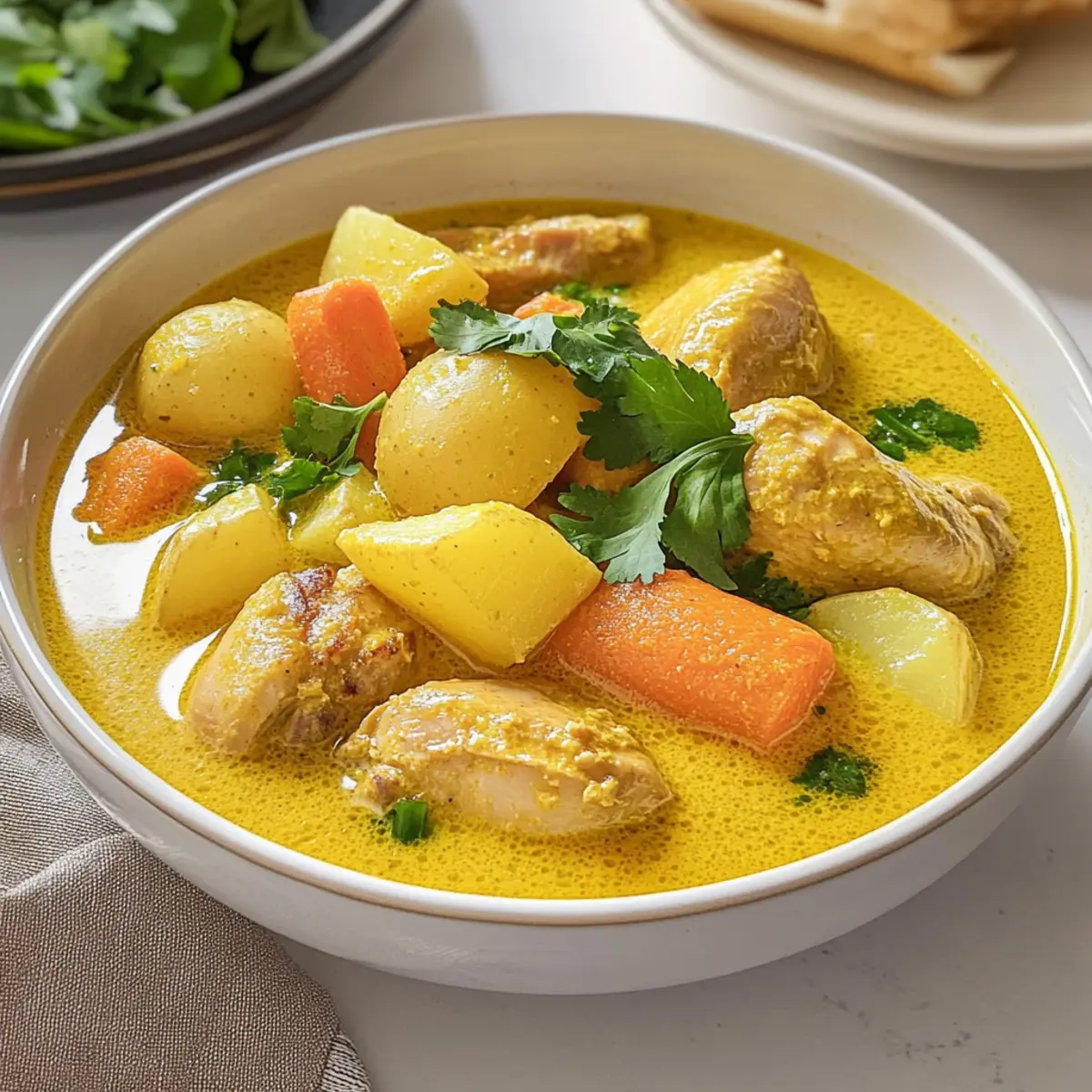
Savor the Comfort of Vietnamese Chicken Curry at Home
Ingredients
Equipment
Method
- Prepare Aromatics: Begin by pulsing shallots, garlic, and ginger in a food processor until finely chopped, achieving a fragrant paste. Reserve half for the marinade and set aside the other half for later use in the Vietnamese Chicken Curry.
- Marinate Chicken: In a large bowl, combine the chicken pieces with the reserved aromatics, yellow curry powder, salt, sugar, chicken bouillon, and vegetable oil. Mix well, ensuring all the chicken is coated thoroughly. Cover and refrigerate for 3-4 hours, or ideally overnight.
- Pan-Fry Vegetables: Heat vegetable oil in a large skillet over medium heat. Add the potatoes, taro, and carrots, frying until golden, about 5-7 minutes. Transfer them to a plate and set aside.
- Pan-Fry Chicken: In the same skillet, add marinated chicken pieces in batches, cooking for about 6-8 minutes until golden brown on all sides. Transfer the browned chicken to a separate plate.
- Sauté Aromatics: In a large pot, add lemongrass and remaining aromatics. Cook for 3-4 minutes until fragrant.
- Add Spices: Sprinkle in yellow curry powder, turmeric, five-spice powder, and bay leaves. Stir these spices into the mixture for about 2 minutes.
- Combine Chicken and Broth: Return the seared chicken to the pot, pour in coconut water and season with extra salt. Bring to a gentle simmer and cover. Cook for about 20 minutes.
- Final Additions: After 20 minutes, add whole milk, coconut milk, and the previously pan-fried vegetables. Stir gently and let everything simmer for an additional 15 minutes.
- Serve: Remove bay leaves and lemongrass stalks. Ladle the Vietnamese Chicken Curry into bowls and serve hot, garnished with cilantro and green onions.
Leave a Reply