
As I stood in my kitchen the other day, the rich aroma of roasting bell peppers filled the air, inviting me to rediscover a delightful classic: Peperonata. This vibrant, Mediterranean vegetable stew is a feast for the senses, brimming with sweet red and yellow peppers, aromatic garlic, and savory onions. The best part? It only takes 30 minutes to whip up this stunning dish, making it a lifesaver for busy weeknights when you crave something hearty yet healthy. Not only is Peperonata vegan-friendly, but it also serves as a versatile companion for crusty bread, pasta, or grains, transforming any meal into a celebration. So, are you ready to dive into this colorful culinary adventure?
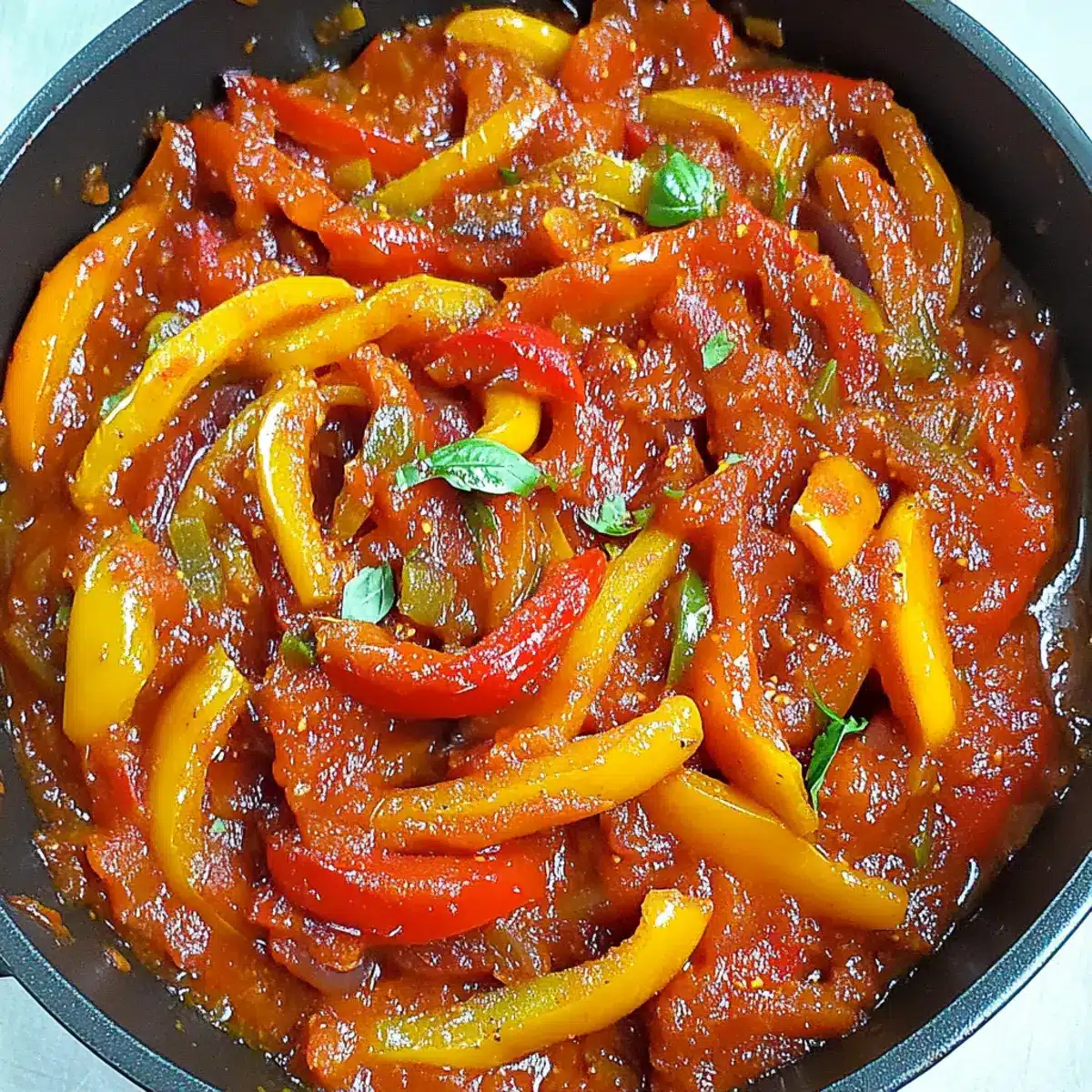
Why is Peperonata a must-try?
Quick and Easy: In just 30 minutes, you can create a mouthwatering meal that’s perfect for busy weeknights.
Vegan Comfort Food: This dish embraces the vibrant, healthful ingredients of the Mediterranean, catering to plant-based diets.
Versatile Pairing Options: Whether served with crusty bread, pasta, or over grains, Peperonata adapts effortlessly to your meal needs.
Rich Flavors: The combination of sweet bell peppers, garlic, and tangy tomatoes creates a harmonious taste that is truly satisfying.
Crowd-Pleasing Dish: Its colorful presentation and robust flavor make it a hit for family dinners and gatherings.
Dive deeper into the world of Mediterranean flavors with this delightful recipe that’s bound to impress your loved ones!
Peperonata Ingredients
For the Vegetable Base
- Red Bell Peppers – Provide sweetness and vibrant color; substitute with green bell peppers for a slightly different flavor.
- Yellow Bell Peppers – Add a sweet flavor and texture; can be replaced entirely with red if preferred.
- Onions – Add depth and sweetness; substitute with shallots for a different onion flavor.
- Garlic – Infuses the dish with aromatic flavor; adjust the amount based on preference; roasted garlic can be used for a milder taste.
For the Sauce
- Olive Oil – Serves as the cooking fat, enhancing flavor and texture; use high-quality extra virgin olive oil for the best taste.
- Passata – A smooth tomato base that gives a fresh flavor; substitute with crushed tomatoes for a chunkier texture.
- Tomato Paste – Concentrated tomato flavor that thickens the sauce; no direct substitution, but reduce quantity if using only fresh tomatoes.
- Balsamic Vinegar – Provides acidity and complexity to the sauce; red wine vinegar can be used as an alternative.
For Seasoning
- Oregano – Adds an earthy, aromatic quality; dried Italian herbs can be used in lieu.
- Basil – Provides a sweet, aromatic finish; fresh basil is ideal, but dried can work in a pinch.
- Salt and Pepper – Essential for enhancing flavors; adjust to taste.
Step‑by‑Step Instructions for Peperonata
Step 1: Heat the Oil
In a large skillet, heat 2 tablespoons of high-quality extra virgin olive oil over medium heat. Allow the oil to warm for about 30 seconds until it shimmers lightly, signaling that it’s ready for the next ingredients. This oil will enhance the flavors in your Peperonata while providing a perfect cooking base.
Step 2: Sauté the Aromatics
Add 3 cloves of minced garlic and 1 medium diced onion to the skillet. Sauté for about 3-4 minutes, stirring occasionally, until the onion becomes translucent and fragrant. The aromatic blend will create a flavorful foundation for the bell peppers, inviting you to the next step in your Peperonata journey.
Step 3: Add the Bell Peppers
Stir in 1 sliced red bell pepper and 1 sliced yellow bell pepper, cooking for an additional 5 minutes. As the peppers soften and their colors brighten, you’ll experience the delightful aroma filling your kitchen. The vibrant hues will make it obvious that you’re about to create a stunning Peperonata.
Step 4: Introduce the Saucy Ingredients
Next, mix in 2 tablespoons of tomato paste, 1 cup of passata, and 1 tablespoon of balsamic vinegar. Season with salt and pepper to taste. Stir everything together and raise the heat slightly to bring the mixture to a gentle simmer, allowing it to thicken for about 10 minutes. You’ll notice the sauce transforming into a rich, tangy blend.
Step 5: Add Herbs for Flavor
After simmering, stir in 1 teaspoon of dried oregano and a handful of fresh basil leaves. Allow the Peperonata to simmer for an additional 2 minutes, letting the herbs infuse their aromatic qualities throughout the dish. The incredible scent will signal that your Peperonata is nearly ready to be enjoyed.
Step 6: Serve and Delight
Once the Peperonata has reached your desired thickness and aroma, remove it from the heat. Serve this vibrant vegetable stew hot, either on its own or over pasta, quinoa, or with crusty bread. The rich colors and delicious flavors of your homemade Peperonata will surely impress family and friends alike.
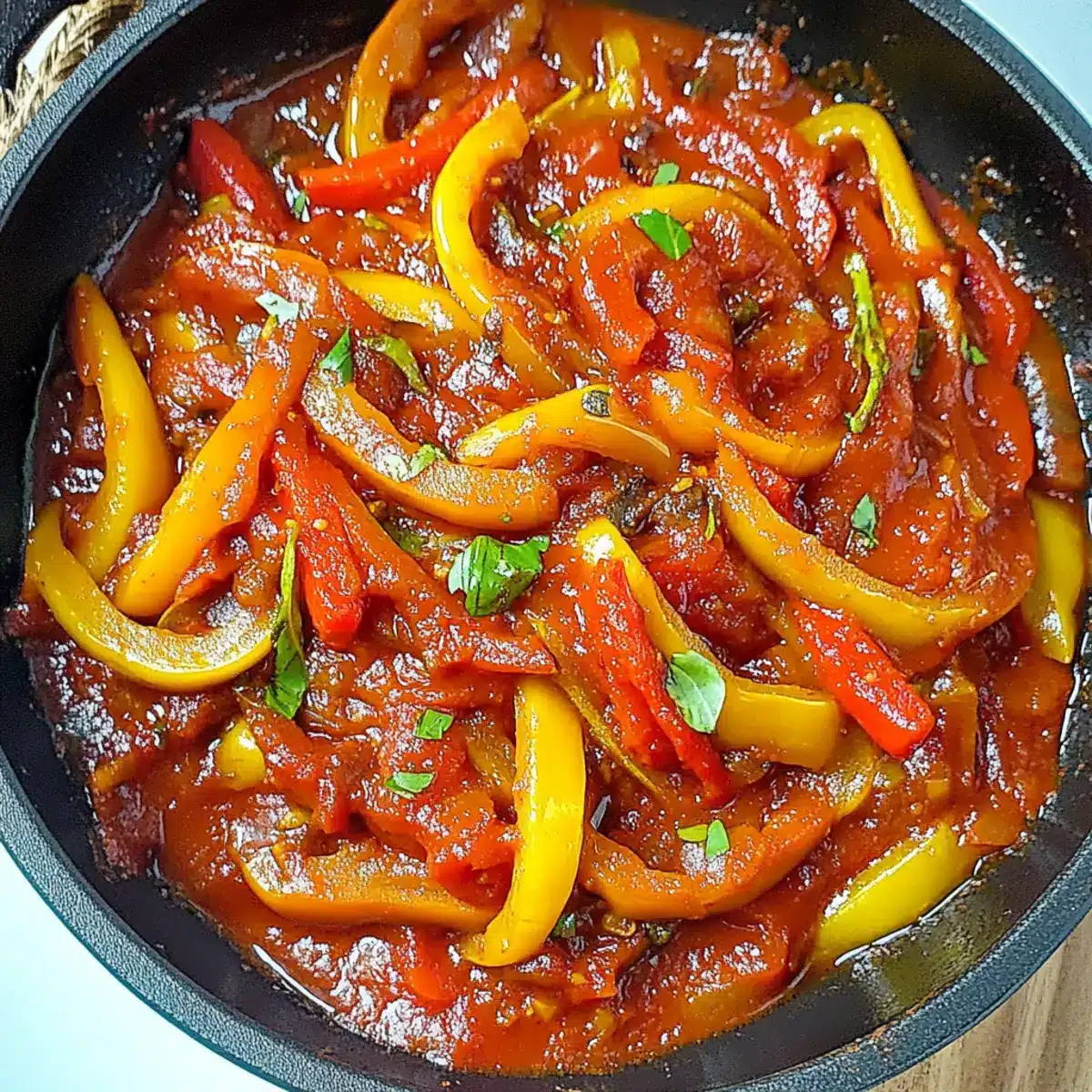
Peperonata Variations & Substitutions
Feel free to explore and customize this delightful Peperonata recipe to suit your tastes!
-
Add Fennel: Sauté sliced fennel along with the onions for a lovely anise flavor. It adds a delightful twist that elevates the dish’s complexity.
-
Protein Boost: Serve the Peperonata over a bed of cooked quinoa or stir in cooked chickpeas. This adds texture and transforms it into a hearty main dish, making it perfect for a filling meal.
-
Herbal Twist: Fresh parsley makes a great garnish, or you can mix in additional dried herbs like thyme or rosemary while cooking for a fresh, aromatic surprise in every bite.
-
Spicy Kick: For a touch of heat, add some red pepper flakes to the sautée. This addition brightens the flavor profile, offering a delightful contrast to the sweetness of the peppers.
-
Creamy Touch: Stir in a few tablespoons of dairy-free cream or cashew cream just before serving for a luscious finish. It transforms the dish into a creamy delight that’s rich and satisfying.
-
Smoky Flavor: Replace regular olive oil with smoked olive oil. This adds a unique twist to your Peperonata, enhancing the smoky flavors without overwhelming the dish.
-
Seasonal Veggies: Explore using other veggies like zucchini or eggplant, sautéing them along with the bell peppers for an even heartier stew. This creates a beautiful medley of colors and textures, perfect for showcasing summer’s bounty.
-
Layered Flavors: If you’re feeling adventurous, try adding olives or capers during the cooking process for a briny kick that pairs wonderfully with the sweetness of the peppers. It’s a nod to Mediterranean cooking that adds another layer of depth.
Exploring these variations will allow you to make this recipe your own! If you’re interested in pairing this with some sides, consider a delectable crusty bread or a refreshing side salad. Enjoy the culinary journey!
How to Store and Freeze Peperonata
Fridge: Store leftover Peperonata in an airtight container for up to 4 days. Make sure it cools down to room temperature before sealing to maintain freshness.
Freezer: If you want to keep Peperonata longer, freeze it in a freezer-safe container for up to 3 months. When ready to enjoy, thaw in the fridge overnight and reheat gently on the stove.
Reheating: To reheat, simply warm the Peperonata in a pan over low heat, stirring occasionally until heated through. Add a splash of water or olive oil if it’s too thick.
Serving Suggestion: Enjoy it hot over pasta, grains, or with crusty bread, ensuring every last drop of your vibrant Peperonata is savored!
Expert Tips for Peperonata
-
Use Quality Oil: Always opt for high-quality extra virgin olive oil to elevate the flavors of your Peperonata.
-
Mind the Texture: Cook the vegetables until just tender; overcooking can lead to mushy peppers and a less appealing dish.
-
Check the Acidity: If the stew tastes flat, add a splash more balsamic vinegar to brighten the flavors.
-
Avoid Watery Results: Steer clear of adding excess water during cooking, as this can dilute the rich tomato sauce.
-
Storage Know-How: Keep leftovers in an airtight container in the fridge for up to 4 days. For longer storage, freeze the Peperonata, though texture may change upon thawing.
Make Ahead Options
These Easy Vegan Peperonata are perfect for meal prep enthusiasts! You can chop and store the bell peppers, onions, and garlic up to 24 hours in advance, keeping them refrigerated in an airtight container to maintain their freshness. Additionally, the sauce components—like the passata, tomato paste, and balsamic vinegar—can be mixed and stored for up to 3 days ahead, allowing the flavors to meld beautifully. When you’re ready to serve, simply sauté the prepped vegetables and combine them with the sauce as you normally would, simmering until heated through. This way, you’ll enjoy a delicious homemade meal that comes together effortlessly, even on the busiest weeknights!
What to Serve with Easy Vegan Peperonata
A charming meal awaits you as you explore what beautifully complements this colorful dish.
- Crusty Bread: Perfect for soaking up the rich tomato sauce, enhancing the textures and flavors of your Peperonata.
- Creamy Polenta: Its silky texture pairs wonderfully with the chunky vegetables, offering a delightful contrast in mouthfeel.
- Garlic Bread: Loaded with flavor, this simple addition elevates your meal to a cozy, comforting feast.
- Quinoa: This nutty grain acts as a perfect base, adding protein and absorbing the sauce’s vibrant flavors.
- Pasta: Toss your Peperonata with al dente pasta for a Mediterranean-inspired dish bursting with color and taste.
- Arugula Salad: A fresh, peppery salad creates balance against the hearty stew, adding a bright, crisp element.
- Red Wine: A medium-bodied red enhances the dish’s rich flavors, creating a delightful dining experience.
- Lemon Sorbet: A light, refreshing dessert that cleanses the palate after the savory flavors, offering a sweet finish.
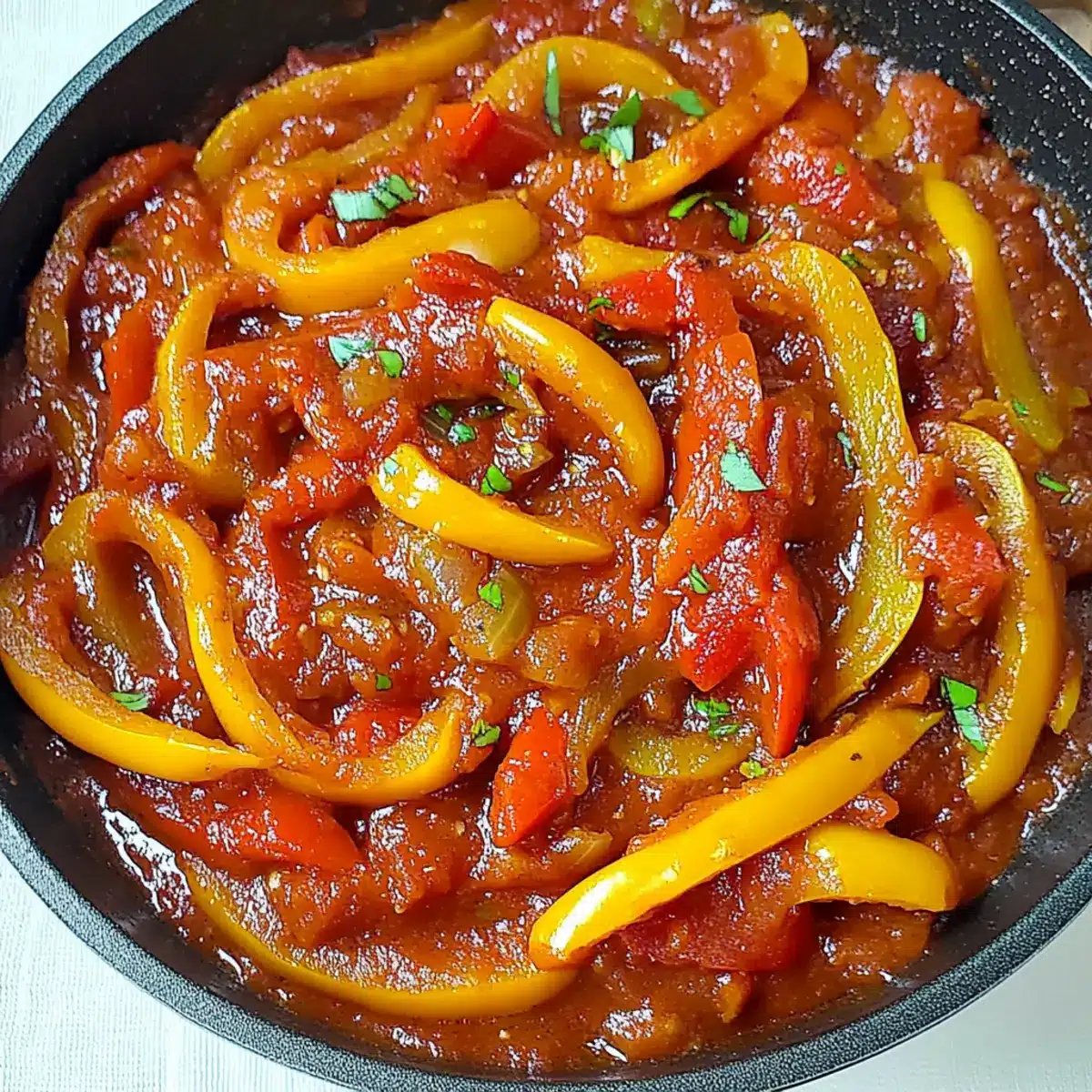
Peperonata Recipe FAQs
What ingredients should I use for the best flavor in Peperonata?
Absolutely! It’s essential to use fresh, high-quality ingredients. Opt for vibrant red and yellow bell peppers for sweetness, and be sure to choose extra virgin olive oil for cooking. The freshness of garlic and onions also plays a significant role, so consider using organic ones when possible. If you’re a fan of robust flavors, feel free to experiment by adding a pinch of chili flakes for a bit of heat!
How do I store leftover Peperonata?
Very simply! Place your cooled Peperonata in an airtight container and refrigerate it for up to 4 days. Make sure it reaches room temperature before sealing, as this will preserve its flavor. When you’re ready to enjoy leftovers, reheat them gently in a pan over low heat, stirring occasionally to distribute the warmth.
Can I freeze Peperonata?
Yes, of course! To freeze your Peperonata, first, let it cool completely. Pour the cooled stew into a freezer-safe container, leaving some space at the top as it may expand while freezing. It can be stored in the freezer for up to 3 months. When you’re ready to eat it, thaw it in the fridge overnight and reheat on the stove over low heat.
What should I do if my Peperonata turns out watery?
If you find your Peperonata is too watery, don’t worry; it’s fixable! Ensure to cook it down on medium heat, allowing excess liquid to evaporate. You can also stir in a little additional tomato paste to help thicken the sauce. If using fresh tomatoes directly, be cautious not to add too much water during cooking, as this can dilute the flavors.
Are there any dietary considerations for Peperonata?
Absolutely! Peperonata is vegan and gluten-free, making it a versatile option for a variety of dietary preferences. However, if you have specific allergies, be sure to check labels on products like passata for any hidden allergens. If cooking for pets, avoid giving them any seasoned or sauced food, as the spices can be harmful.
Can I add more vegetables to my Peperonata?
The more the merrier! Peperonata is versatile, and you can definitely expand on the vegetable base. Consider adding vegetables like zucchini or eggplant for extra texture and flavor. Just remember to adjust the cooking time slightly to ensure all the veggies are tender when you serve your dish!
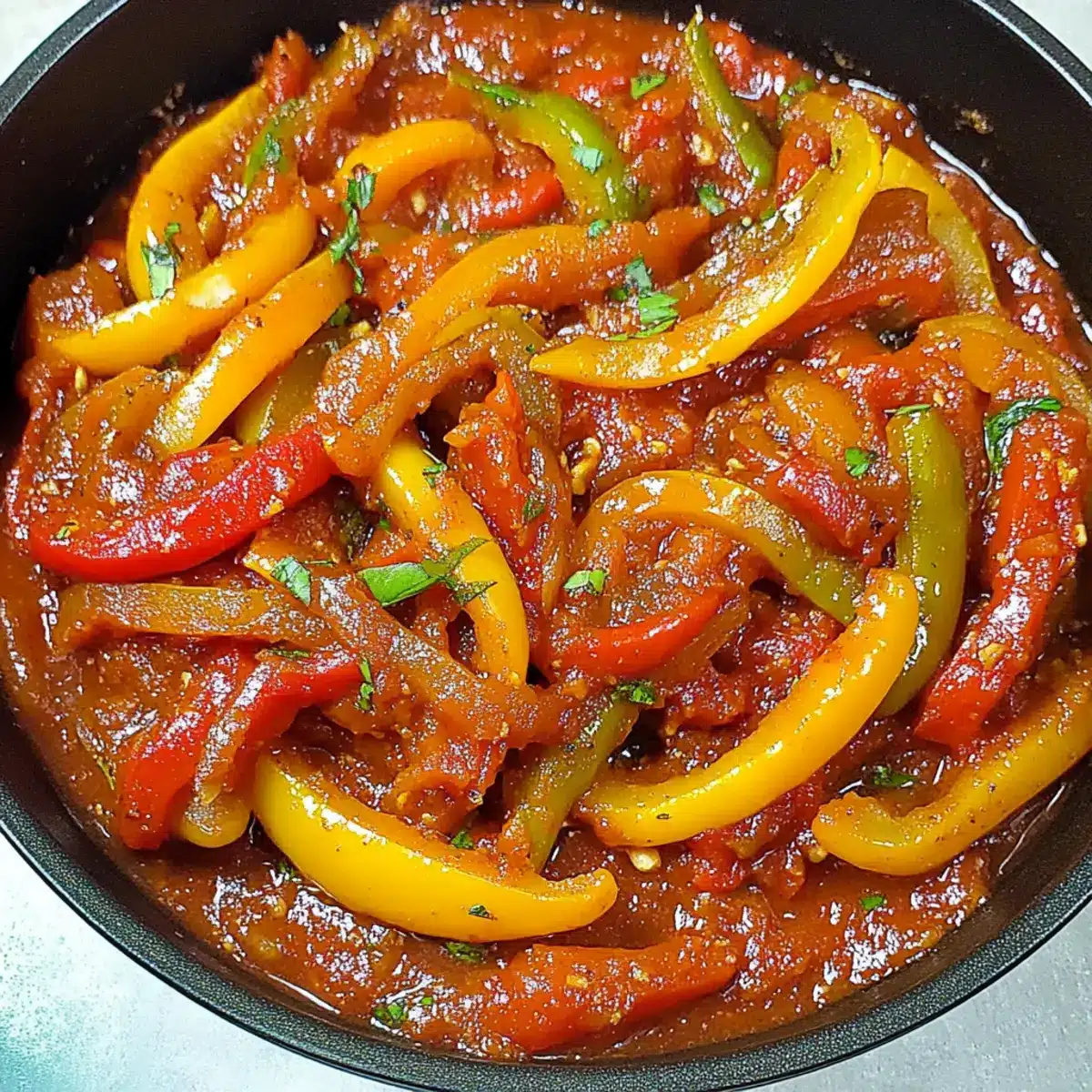
Vibrant Peperonata: A Quick & Easy Vegan Delight
Ingredients
Equipment
Method
- In a large skillet, heat 2 tablespoons of olive oil over medium heat until it shimmers.
- Add 3 cloves minced garlic and 1 medium diced onion. Sauté for 3-4 minutes until translucent.
- Stir in 1 sliced red bell pepper and 1 sliced yellow bell pepper. Cook for an additional 5 minutes.
- Mix in 2 tablespoons of tomato paste, 1 cup passata, and 1 tablespoon balsamic vinegar. Season with salt and pepper, and simmer for about 10 minutes.
- After simmering, stir in 1 teaspoon of dried oregano and a handful of fresh basil leaves. Allow to simmer for 2 more minutes.
- Remove from heat and serve hot over pasta, grains, or with crusty bread.
Leave a Reply